
What if the key to helping your child connect with the Quran isn’t more repetition, but a different way of learning altogether?
We understand. As Muslim parents in the West, we share a heartfelt dream: to see our children build a loving, lasting relationship with the Quran. Yet, our reality is often a busy schedule and the frustrating cycle of short-term memorization that fades too quickly.
Traditional methods, while well-intentioned, can feel out of sync with our modern lives and our children’s world. This leaves us searching for a path that is both effective and joyful.
That’s why we’re here. This article explores a transformative, science-backed approach. We move beyond rote learning to a method that builds deep understanding and recall. Together, we’ll demystify the process for Surah An-Naba, providing a clear, actionable plan. Let’s make this Quranic milestone achievable and filled with meaning for your child.
Key Takeaways
- Acknowledge the real-world challenges of time and retention faced by modern families.
- Shift from pure repetition to a learning method that builds genuine understanding.
- Apply a science-supported framework designed for today’s children.
- Foster a joyful and sustainable connection with the Quranic text.
- Follow a clear, step-by-step plan to achieve memorization goals.
- Empower your child with lasting recall and appreciation for the verses’ meaning.
The Struggle is Real: Why Memorization Feels Hard for Our Kids Today
For diaspora families, the dream of their children holding the Quran in their hearts often clashes with the reality of packed calendars and fading focus. We see the sincere desire to connect with the divine words, yet the path of verse memorization feels strewn with obstacles unique to our modern, Western context.
The Time Crunch of Modern Family Life
Between school, sports, music lessons, and the general rhythm of a busy household, dedicated Quran time frequently gets relegated to the “if we can” category. It’s not a lack of faith, but a surplus of commitments. This constant time pressure means that even when we sit down with our children, the sessions can feel rushed and stressful—hardly the serene, focused environment ideal for spiritual learning.
The Frustration of Short-Term Retention
Many of us rely on the traditional method of pure auditory repetition. While foundational, this approach alone can lead to a disheartening cycle. A child may learn a verse one day, only to have it seemingly vanish a week later. This short-term retention problem is a major source of frustration, making both parent and child feel like they are failing, when the issue is often the memorization strategy itself.
A New Hope for Diaspora Parents
This struggle is deeply understood. You are not alone in feeling that tension. The good news is that effective quranic memorization techniques exist that align with both our Islamic values and the realities of 21st-century life. We don’t need to invent more hours; we need smarter, more engaging memorization tips that make every minute count. This is where a new, structured approach offers genuine hope, transforming struggle into a sustainable and joyful journey.
Next lesson starts with the last verse from this video.
Continue memorizing Surah An-Naba step by step.
The Power of Visual Learning: A Scientific Perspective for Lasting Memory
Modern neuroscience offers a clear window into why some memories stick for a lifetime while others fade—it often comes down to how our brains see the world. For our children’s quranic memorization journey, this isn’t just an interesting fact; it’s the foundation for a transformative method. We move beyond pure repetition to engage the mind’s innate wiring, creating memories that are deep, durable, and easier to recall.
How the Brain Processes and Stores Visual Information
When your child looks at a picture linked to a Quranic verse, something powerful happens. The brain’s visual cortex lights up, processing the image’s shape, color, and meaning. This information doesn’t stay isolated. It travels to the hippocampus, the brain’s memory center, creating a rich, multi-sensory memory trace.
Scientists call this “dual-coding.” The sound of the Arabic words and the associated visual anchor are stored as two connected codes. This double-layered storage makes the memory far more robust than sound alone. It’s like securing a file in two different, linked folders instead of one.
Sequential Memory: Building Chains of Recall
Memorizing verses in order is a specific cognitive skill. Our method leverages the brain’s natural ability to build sequences through visual storytelling. Each verse gets a unique, memorable image—a visual anchor.
As your child learns, they link these anchors into a mental chain or a “memory palace.” To recall Surah An-Naba verses 6-9, they simply walk through this palace in their mind. The visual cues trigger the correct Arabic words in the right sequence, turning a struggle into a smooth, guided journey.
| Aspect | Traditional Auditory-Only Memorization | Sequential Visual Memorization |
|---|---|---|
| Primary Sensory Input | Hearing & Speech | Sight, Hearing, & Imagination |
| Memory Strength | Can be fragile; relies on repetition | Durable; uses dual-coding in the brain |
| Ease of Sequential Recall | Prone to mixing up order | Strong; guided by visual story chain |
| Engagement for Children | Can feel like a chore | Feels like creative play and discovery |
| Alignment with Islamic Learning | Focus on rote recitation | Enhances recitation with understanding (tadabbur) |
Bridging Islamic Tradition with Modern Pedagogy
Some may wonder: is this a new, Western concept? Quite the opposite. We are using modern cognitive science to serve the timeless goals of our tradition. Classical Islamic scholarship deeply valued tadabbur—reflective understanding. Teachers used vivid imagery, parables, and stories to make complex ideas stick.
Our approach honors this legacy. We are not replacing sacred islamic memorization practices; we are empowering them with tools proven by science. This bridge connects the wisdom of our past with the effective quran recitation techniques needed for our children’s future. It makes the Quran’s message resonate in a way that aligns perfectly with how young minds learn today.
The result? A child who doesn’t just recite, but connects. A memory that isn’t fleeting, but foundational. This is the promise of science serving faith.
Introducing Sequential Visual Memorization: Our Core Method
We introduce Sequential Visual Memorization as a structured yet intuitive framework that turns memorization from a chore into a discovery. This is our science-backed answer to the challenges of modern quranic studies. It moves beyond simple repetition to engage a child’s whole mind. The result is a deeper, more joyful connection with the words of Allah.
What is Sequential Visual Memorization?
Sequential Visual Memorization is a proprietary learning system. It combines cognitive science with the timeless goals of Islamic education. At its core, it is a three-pillar process. This process transforms abstract Arabic text into vivid, memorable mental images arranged in a logical order.
This method respects your child’s natural learning style. It reduces cognitive overload and builds confidence from the first verse. We designed it specifically for the unique context of diaspora families. It provides a clear, manageable path to lasting retention.
The Three Pillars of the Method: See, Sequence, Secure
Our method stands on three interconnected pillars. Each one builds upon the last to create an unbreakable chain of memory. These pillars are designed to work together seamlessly.
1. See: The first step is creating a visual anchor. We connect each Arabic word or short phrase with a simple, meaningful picture. This moves the verse from an abstract sound to a concrete image in your child’s mind. It taps into the brain’s powerful visual cortex, which is far stronger than the area used for rote auditory repetition.
2. Sequence: Next, we arrange these visual anchors in a specific, story-like order. We call this a “Memory Palace.” This palace maps directly onto the sequence of the verses. It builds the critical chain of recall that prevents mixing up lines—a common frustration in traditional memorization techniques.
3. Secure: The final pillar is about moving knowledge from short-term to long-term memory. We use guided, engaging repetition that activates both visual and auditory pathways. This isn’t mindless drilling. It’s a conscious practice of revisiting the visual sequence and the correct quranic recitation. This step ensures the verse becomes a permanent part of your child’s heart and mind.
| Pillar | How It Works | Key Benefit for Your Child |
|---|---|---|
| See | Transforms Arabic text into clear, associated images. | Creates a concrete mental “hook” for each word, making it stick. |
| Sequence | Places images into a logical, memorable order (Memory Palace). | Builds a reliable roadmap for the verse order, eliminating confusion. |
| Secure | Uses multi-sensory repetition to solidify the memory. | Transfers the verse from fleeting recall to lasting, confident mastery. |
This triad forms a complete cycle of learning. It is especially powerful for the profound verses of surah an naba tarteel. By engaging multiple parts of the brain, it creates a richer, more durable memory trace. This approach aligns with both modern pedagogy and the Islamic tradition of understanding and reflection. It turns the act of memorization into an active, engaging process of building meaning.
Why These Four Verses? The Significance of Surah An-Naba 6-9

Surah An-Naba verses 6-9 are not merely a sequence of Arabic words to be recited; they are a profound invitation for young minds to witness the signs of Allah woven into the very fabric of their daily lives. We selected these four verses intentionally, as they provide the ideal bridge between a child’s concrete experience of the world and the abstract, majestic concepts of divine power and purpose.
A Glimpse into Allah’s Magnificent Creation
These verses from Surah An-Naba 6-9 present a concise yet powerful catalog of divine blessings. They begin by asking a reflective question about the earth made a vast, stable bed (mihada). This is an image every child understands—the comfort and security of a resting place.
The description then moves to the mountains as firm pegs (awtada), anchoring the landscape. Next is the creation of humans in complementary pairs, a fundamental social reality. Finally, the blessing of sleep is highlighted as a nightly reset for our bodies and minds.
Each element is a tangible Ayat (Sign). They are not distant miracles but observable, everyday proofs of Allah’s deliberate design and care. Exploring the surah an naba verses 6-9 tafsir reveals these verses as direct evidence for the possibility of Resurrection, rooting a mighty theological concept in the physical world.
Building a Foundation of Awe and Understanding
The core benefits of memorizing Surah An-Naba verses 6-9 extend far beyond phonetic recall. When your child learns “Have We not made the earth a resting place?”, they are simultaneously learning to see the ground beneath their feet as a sign of divine mercy.
This method transforms memorization from a task into a discovery. We are building a cognitive and spiritual foundation where Quranic words are intrinsically linked to observing and appreciating creation. This fosters a genuine sense of wonder and awe (ta’meer).
That wonder is what makes the learning meaningful—and therefore enduring. The verses become a lens through which your child views their world, planting early seeds of iman that connect their Islamic identity to their lived experience in the West.
A Complete Solution: The Ayah & Tardeed Juz Amma Mastery Package
Translating a powerful memorization method into daily practice requires a structured system. Understanding the Sequential Visual approach is the first step; implementing it consistently with your child is the next, and often more challenging, phase. We created the Ayah & Tardeed Juz Amma Mastery Package to be that indispensable system—a complete, ready-to-use resource that turns theory into tangible progress.
What is the Ayah & Tardeed Mastery Package?
This package is a comprehensive digital learning suite designed specifically for mastering Juz ‘Amma, including the pivotal verses of Surah An-Naba (6-9). It moves beyond generic memorization resources by providing a structured, lesson-by-lesson roadmap.
Each lesson deconstructs verses into manageable segments. These segments are paired with custom, engaging visual anchors that serve as mental hooks. The package includes clear Arabic audio for perfect pronunciation (tardeed) and provides simple, meaningful context about the verses. It’s a holistic toolkit that addresses sight, sound, and understanding.
How the Package Embodies Sequential Visual Memorization
The package is the practical embodiment of the method we’ve described. It operationalizes the three pillars: See, Sequence, and Secure.
First, children See the visual anchor for each phrase, creating a strong initial memory imprint. Next, the lessons Sequence these images and their corresponding verses in a deliberate, building order. This builds the “memory chain” crucial for recalling verses in the correct flow.
Finally, interactive exercises and the included audio repetition (tardeed) help Secure the connection permanently. This methodical approach is what transforms simple memorization tools into a profound learning experience, offering effective surah an naba memorization tips embedded within a larger framework.
Designed for the Busy Western Muslim Household
We built this package with your real-life constraints in mind. It is self-paced, requiring no daily preparation from you—even if you are not fluent in Arabic. The lessons are concise and focused, fitting into short, productive sessions that respect your family’s schedule.
A key feature is lifetime access. This means siblings can all benefit from the same resource over the years. It also allows for easy revision anytime, solidifying the surah an naba 78:6-9 memorization and beyond. We’ve removed the guesswork and pedagogical heavy lifting, empowering you to step confidently into your role as a guide, supported by a professional, science-backed system.
This package isn’t just another item on a list of memorization resources. It is a dedicated partner in your family’s journey, designed to make Quranic connection consistent, achievable, and deeply rewarding within the rhythm of Western life.
How to Memorize Surah An-Naba Verses 6-9 Easily: A Step-by-Step Guide for Parents
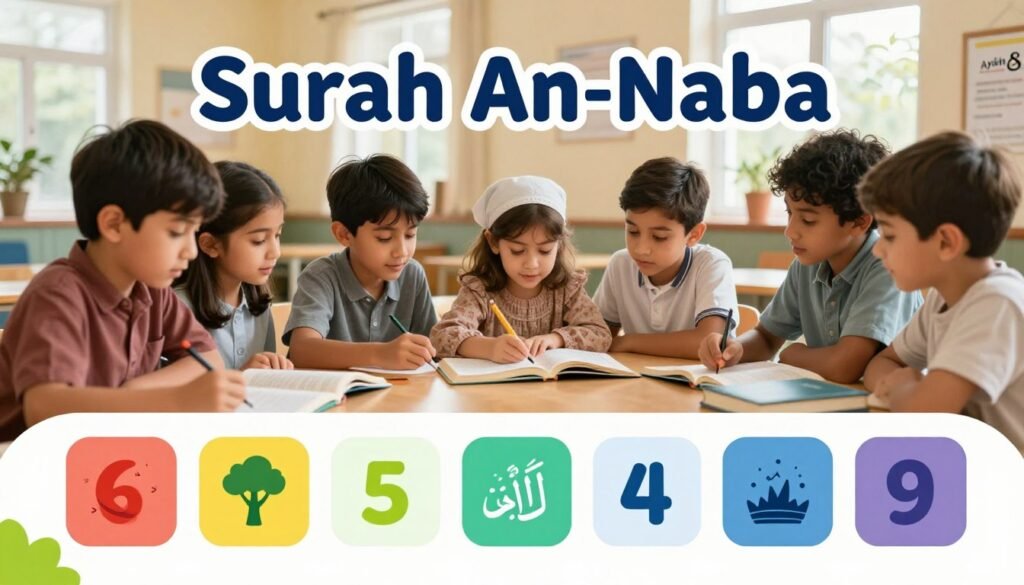
Let’s move from understanding the ‘why’ to mastering the ‘how’ with a clear, actionable guide designed specifically for busy parents. We’ve explored the science of visual learning and the profound meaning behind these verses. Now, we provide a practical roadmap to transform that knowledge into lasting recall for your child. This four-step process applies our Sequential Visual Method directly to the surah an naba arabic text verses 6-9, making memorize quran verses an engaging, structured activity rather than a daunting task.
Each step builds upon the last, creating multiple layers of memory—contextual, visual, auditory, and spatial. By following this guide, you are not just helping your child repeat words; you are helping them build a meaningful, durable connection with the Quran. We’ll walk through this together, offering specific techniques you can implement immediately in your home.
Step 1: Establish Connection & Context Before Memorization
Jumping straight into Arabic sounds can feel abstract and confusing for a child. The foundation of successful quran memorization help is built on understanding. Before introducing a single Arabic word, sit with your child and discuss the majestic meaning of these verses in English.
Describe the earth (al-ard) as a vast, comfortable bed (mihadan) that Allah has spread out for us. Explain how mountains are like giant tent pegs (awtadan) that stabilize the ground. Talk about the blessing of being created in pairs (azwajan)—families and friends. Finally, discuss sleep (naum) as a divine gift of rest (subatan) that recharges our bodies. Frame this conversation as an exploration of Allah’s amazing signs. This step builds emotional and intellectual buy-in, giving the Arabic phrases a “home” in your child’s mind before they even learn them.
Step 2: Introduce the Arabic with Visual Anchors
Now, link each profound meaning to its corresponding Arabic phrase. Introduce the complete text one segment at a time, pairing each with a simple, consistent visual anchor. The full surah an naba arabic text verses 6-9 is:
أَلَمْ نَجْعَلِ الْأَرْضَ مِهَادًا وَالْجِبَالَ أَوْتَادًا وَخَلَقْنَاكُمْ أَزْوَاجًا وَجَعَلْنَا نَوْمَكُمْ سُبَاتًا
For “الْأَرْضَ مِهَادًا” (the earth as a bed), you could draw a simple curved line with a smiling person resting on it. For “الْجِبَالَ أَوْتَادًا” (mountains as pegs), sketch a triangle mountain with a rope going down into the earth. The goal isn’t artistic perfection; it’s creating a clear, memorable mental picture. You can use gestures too—making a wide bed shape with your arms or hammering a peg with your fist. This step directly taps into how the brain processes and stores visual information, creating a strong hook for the Arabic words.
Step 3: Master Pronunciation Through Echo Play
With the visual anchors set, focus on the beautiful sound of the Quran. This is where high-quality audio is non-negotiable. Use a clear, melodious recitation—like the one provided in our Ayah & Tardeed package—as your gold standard.
Practice “Echo Play.” Play a short segment (e.g., “أَلَمْ نَجْعَلِ الْأَرْضَ مِهَادًا“). You say it clearly, then have your child repeat it immediately after, mimicking your tone and rhythm. Keep sessions short (5-7 minutes) and playful. The objective here is auditory mastery and muscle memory for the tongue, not reading the script. Celebrate their effort, not just perfect accuracy. This playful repetition solidifies the phonetic pattern, making the pronunciation feel natural and familiar.
Step 4: Build the Sequence Through a Memory Palace
This final step is where isolated phrases become a solid, unbreakable sequence. A “Memory Palace” is a powerful technique where you place your visual anchors in a specific, familiar order to walk through mentally. For memorizing surah an naba 78:6-9, create a simple storyboard.
Imagine a poster with four boxes. In box one, draw your earth-bed. In box two, draw a mountain-peg right next to the bed, holding it down. In box three, draw two people (a pair) standing on that mountain. In box four, draw those same people sleeping soundly in a tent. Now, walk through this visual story while listening to the full audio of the four verses. Point to each image as its corresponding Arabic phrase is recited. This multi-sensory review—seeing the sequence, hearing the sounds, and recalling the meaning—locks the order into long-term memory. It turns the challenge of “how to memorize surah an naba 78:6-9” into an engaging visual narrative your child can revisit anytime.
By following these four steps—Context, Visual Anchor, Echo Play, and Memory Palace—you equip your child with a complete toolkit. You move beyond rote repetition to cultivate deep, joyful, and permanent connection with these divine words.
Creating a Supportive Environment for Quranic Memorization
For our children to truly internalize the Quran, we must first build a sanctuary for their learning. The right environment acts as fertile soil, allowing the seeds of Surah An-Naba verses 6-9 to take deep root. For diaspora families, this intentional crafting of space and rhythm transforms your home into a reliable center of Islamic education.
Designating a Sacred, Distraction-Free Space
Begin by creating a simple “Quran Corner.” This is a clean, quiet spot associated solely with positive focus and connection. It doesn’t need to be large—a comfortable cushion near a bookshelf, a small rug by a window. The key is consistency; this space signals to the brain, “It is time for Quran.” Remove digital distractions and keep the area tidy. This physical anchor is a powerful tool for quran memorization tips, making each session feel special and distinct from playtime or homework.
The Role of Consistent Routine and Realistic Expectations
Consistency triumphs over duration. A focused ten-minute daily practice for surah an naba ayat 6-9 memorization yields far better results than a stressful, sporadic hour. Set a predictable time—perhaps after breakfast or before bedtime. Most importantly, set realistic, celebratory goals. Instead of “memorize a verse,” aim for “master the phrase ‘the earth as a bed’ this week.” Celebrate these small victories. This approach builds confidence and prevents burnout.
The table below contrasts common approaches to help you build a sustainable routine:
| Factor | Ineffective Approach | Effective, Supportive Approach |
|---|---|---|
| Space | Reciting wherever is convenient, amidst toys and screens. | A dedicated, calm “Quran Corner” used only for recitation and reflection. |
| Time | Irregular, long sessions when you remember. | Short, daily sessions at a consistent time, even if only 10 minutes. |
| Goals | Vague targets like “learn more.” | Specific, bite-sized goals (e.g., “perfect the pronunciation of one line”). |
| Parental Role | Acting solely as a taskmaster checking progress. | Participating as a fellow learner, sharing in the wonder of the verses. |
Modeling Love for the Quran: You Are Their First Teacher
Your genuine engagement is the most powerful element of the environment. Let your child see you recite, even slowly. Share your sense of awe about the mountains described in surah an naba verse 6 7 8 9. When you model love and respect for the Quran, you teach more than words—you teach devotion. You are their primary guide. This authentic connection turns your intentionally crafted space into a true mini-madrasah, perfectly tailored to your child’s rhythm and your family’s life in the West.
Overcoming Common Challenges in Children’s Quran Memorization
Let’s address the real-world hurdles you might face while guiding your child through memorizing Surah An-Naba verses 6-9. Every memorization journey has its moments of friction, but with the right quran memorization tips, these challenges become stepping stones, not roadblocks. We’ve compiled practical strategies for the most frequent issues parents like you encounter.
Knowing what to expect—and how to respond—can turn a stressful situation into a confident teaching moment. Here is our guide to navigating common obstacles.
“My Child Loses Focus Quickly” – Strategies for Short Attention Spans
In our fast-paced world, a child’s focus is a precious commodity. The key is to work with their attention span, not against it. Transform your surah an naba 78:6-9 memorize session into a series of quick, engaging sprints.
Use the visual anchor cards as flashcards in a fast-paced game. Set a timer for two or three minutes and challenge your child to “beat the clock.” This creates a fun, goal-oriented energy. Keep the entire session to ten minutes or less, ending on a high note of success. Short, frequent practice is far more effective than one long, draining effort.
“They Mix Up the Order of Verses” – Reinforcing the Sequence
Jumbling the sequence is a classic hurdle in memorization. This is precisely why our Sequential Visual Method is so powerful. When the order gets confused, don’t just repeat the audio. Go back to the visual story.
Lay out the image cards in order and have your child physically point to each one as they recite. The sequence is stored in the brain’s spatial memory through this “Memory Palace” technique. By re-anchoring the words to the pictures and their placement, you reinforce the correct chain of recall directly.
“I’m Not Fluent in Arabic Myself” – Leveraging Quality Resources
Your role is not to be the perfect pronunciation expert, but the coach and motivator. Leverage high-quality, trusted resources to provide the correct model. This allows you to learn alongside your child with confidence.
Rely on clear digital audio tools or the professional recitation included in structured packages. Press play, and echo the recitation together. Your value lies in creating the supportive environment, tracking progress, and celebrating effort. You are guiding the journey, and the right tools ensure the path is accurate.
“The one who is proficient in the recitation of the Qur’an will be with the honorable and obedient scribes (angels) and he who recites the Qur’an and finds it difficult to recite, doing his best to recite it in the best way possible, will have a double reward.”
Maintaining Motivation Over the Long Term
Sustained effort requires connection to a deeper purpose. Frequently revisit the beautiful meaning of the verses—the mountains as pegs, the earth as a resting place. Remind your child that this is a conversation with Allah, not a performance for grades.
Celebrate the effort more than the flawless output. Use a visual progress chart or reward completion with special time together, not just material gifts. This keeps the intrinsic joy of learning alive. Consistent, positive encouragement from you, their first teacher, is the ultimate fuel for their long-term journey in Quranic study.
By applying these strategies, the process of Surah An-Naba verses 6-9 recitation becomes more manageable and rewarding for your entire family.
Your Path Forward in Quranic Memorization
We have walked together from recognizing the modern challenges of memorization to discovering a powerful, science-backed approach. The struggle to help our children retain sacred verses is real. The solution lies in methods that respect both their developing minds and our faith.
Choosing to memorize Surah An Naba verses 6-9 is a profound decision. It moves beyond simple recitation. It plants a lasting seed of awe for Allah’s creation directly in your child’s heart. This act of islamic memorization builds a foundation of spiritual connection that can last a lifetime.
The Sequential Visual Memorization method turns this goal into an engaging, achievable reality. It transforms abstract Arabic text into memorable visual stories. This is one of the most effective quranic memorization techniques for today’s young learners. It bridges traditional reverence with modern cognitive science.
Your next step is clear. Begin by implementing one practical tip from our guide with your child today. For a complete, structured system, explore our Ayah & Tardeed Mastery Package. We designed it to support your family’s unique rhythm. Start this meaningful chapter in your child’s Quranic journey now. We are with you, providing the tools and partnership for success.
Do you prefer reading in Arabic? Check out our article on visual learning here.
This article is related to sequential recitation and memorizing verses easily and effortlessly.