
What if helping your child memorize the Quran could be less about pressure and more about meaningful connection?
For Muslim parents, especially those raising children in the West, guiding a child through Quran memorization is a deeply cherished aspiration. It’s about planting the seeds of a lifelong relationship with the holy book. Yet, we know this noble goal can feel daunting amidst busy schedules and limited local resources.
The good news is, the landscape of Islamic education is evolving. With the rise of dedicated online learning, effective guidance is more accessible than ever. This article is your friendly, practical roadmap. We’ll move beyond theory to share actionable steps you can use at home.
Our focus is on creating a supportive and joyful environment. The best way to memorize Quran blends consistency with compassion, turning this spiritual journey into a bonding experience for your entire family.
Key Takeaways
- Creating a positive and connected home environment is foundational for successful memorization.
- Modern online resources provide valuable support, especially for families outside majority-Muslim communities.
- Consistency in short, daily practice sessions is far more effective than occasional long lessons.
- The parent’s role is to be a gentle guide and encourager, not just a taskmaster.
- Integrating the Quran’s meanings and stories makes the memorization process engaging and meaningful for a child.
- Celebrating small milestones builds confidence and sustains motivation throughout the hifz journey.
- A practical, step-by-step approach can transform an overwhelming goal into an achievable daily practice.
The Lifelong Benefits of Quran Memorization for Kids
Embarking on the journey of Quran memorization offers children a treasure trove of benefits that extend far beyond religious practice. This sacred undertaking shapes their heart, mind, and character in ways that last a lifetime. It’s an investment in their spiritual well-being and personal development.
Nurturing Faith and Islamic Identity from a Young Age
Memorizing Allah’s words builds an unbreakable bond of faith. From a young age, children internalize divine guidance, fostering a deep, personal connection to their Creator. This practice is the core of islamic studies for children.
It strengthens their Islamic identity, especially important in diverse environments. The Quran becomes a constant companion, a source of comfort and moral direction. This early attachment to Allah lays a rock-solid foundation for their entire life.
Enhancing Memory, Discipline, and Academic Performance
The discipline of Hifz is a powerful brain workout. Regular memorization sharpens a child’s focus and dramatically improves their overall memory capacity. This mental training builds incredible focus and self-control.
These skills directly translate to the classroom. Children often see better grades and a stronger ability to learn other subjects. The routine required for quran learning for children teaches time management and perseverance—qualities every successful student needs.
A Source of Eternal Reward and Parental Pride
The spiritual rewards are eternal. The Prophet Muhammad (peace be upon him) highlighted the honor awaiting those who memorize the Quran. This promise offers a profound sense of purpose that goes beyond any worldly achievement.
For parents, the pride is immense. Witnessing your child recite Allah’s book from memory is a joy that cannot be measured. It is a shared family accomplishment that brings immense blessing and unity. This journey is about building character and securing a legacy of faith.
Understanding the Journey of Quran Memorization for Kids
Think of helping your child memorize the Quran not as a race to a finish line, but as a scenic hike you take together, step by step. This shift in mindset is the foundation of positive and effective quran education at home. It transforms the experience from a stressful duty into a bonding spiritual adventure.
It’s a Marathon, Not a Sprint: Patience is Key
True memorization, or Hifz, is a lifelong companion to your child’s faith. The goal is deep, lasting connection, not just fast recall. Experts remind us that “Hifz is not about speed” but is built on “love and patience.” Rushing can create anxiety and spoil the joy of learning.
Your patience as a parent is just as important as your child’s effort. Comparing your child’s progress to others is a sure path to frustration. Every learner’s journey is beautifully unique.
| Approach | Focus | Likely Outcome |
|---|---|---|
| Pressure-Based Approach | Speed, quantity, matching others | Burnout, stress, a negative association with the Quran |
| Journey-Based Approach | Consistency, understanding, personal growth | Steady progress, a love for recitation, and a strong Islamic identity |
Aligning Your Goals with Your Child’s Capacity
The most practical thing you can do is watch and learn. Notice your child’s energy patterns. Are they sharp in the morning or after school? See how they learn best—by listening, seeing, or moving?
Set goals based on what you see. A realistic goal for one child might be three new lines a week; for another, it might be mastering one line with perfect Tajweed. Remember, “everyone’s pace is different.” Flexible, achievable goals prevent burnout and make every small victory a cause for celebration. This personalized plan is the heart of successful at-home quran education.
Common Hurdles in Kids’ Quran Memorization and Practical Solutions
Understanding the typical struggles children face can transform a frustrating memorization session into a productive one. Every child’s journey is unique, but certain hurdles are almost universal. The good news is that with a few effective quran memorization tips, you can guide your child past these obstacles smoothly.
Short Attention Spans and Wandering Focus
It’s completely normal for young minds to drift. You might find your child fidgeting or staring out the window after just a few minutes. This doesn’t mean they can’t learn; it means the approach needs adjustment.
The solution is to work with their attention span, not against it. Keep sessions incredibly short—5 to 10 minutes is often perfect. Use a visual timer so they can see the time passing. Incorporate quick physical breaks or simple hand movements related to the verse to reignite their focus.
The Struggle with Arabic Pronunciation and Fluency
Arabic contains sounds not found in English, which can make pronunciation feel awkward and slow. A child might stumble over the same word repeatedly, leading to discouragement.
Here, technology is your best friend. Play audio from a skilled Qari (reciter) and use the “listen-and-repeat” method. Let your child hear the correct pronunciation multiple times before trying it themselves. Break longer words into small, manageable syllables. Emphasize learning basic Tajweed rules from the start to build a strong, beautiful foundation.
The Frustration of Forgetting Old Verses
Nothing feels more disheartening than watching your child perfectly recall a new ayah but draw a blank on one they mastered last week. This is where many parents worry.
First, remember that forgetting isn’t failure; it’s a natural part of how our brains work. The key is systematic revision. Build a simple, spaced repetition schedule. Review older verses for just a few minutes every day before starting new material. Turn this revision into a fast-paced game or a quick recap during car rides to make it feel less like a test.
Lack of Interest or Internal Motivation
Sometimes, the initial excitement fades, and memorization starts to feel like a daily chore. When a child lacks internal drive, external pressure rarely works.
Your goal is to reconnect the activity with joy and meaning. Link the verses to exciting Islamic stories or discuss their meaning in everyday life. Create a sticker chart or a progress thermometer they can color in. Celebrate the completion of every surah, no matter how small. Sometimes, the best of all quran memorization tips is to make it a shared family activity, where everyone participates and encourages each other.
Creating a Quran-Conducive Environment at Home
Your home can be the most powerful classroom for your child’s Quran learning journey. A supportive atmosphere makes memorization feel natural and joyful, not like a chore. Let’s build that space together with a few simple steps.
Setting Up a Dedicated, Peaceful Learning Corner
Start by choosing one special spot. This tells your child that Quran time is important. A corner of their room or a quiet part of the living room works perfectly.
Keep it simple and free from clutter. The goal is to minimize distractions, especially from screens and phone notifications. This dedicated space signals to their brain, “It’s time to focus.”
- A comfortable cushion or small chair
- A low table for their Quran mushaf
- Good lighting
- A small shelf for their supplies
The Power of Parental Example: Recite Together
Children learn best by watching you. Your active participation is the most effective tool for Quran for children. When they see you recite, it becomes a valued family activity.
You don’t need to be a Hafiz. Just open the Quran and read together for five minutes. Your effort shows them this is a lifelong practice. This shared time builds connection and makes the experience less intimidating for them.
Making the Quran a Natural Part of Your Home’s Soundscape
Passive listening is a secret weapon. Playing beautiful recitation in the background familiarizes your child with the rhythm and melody of Arabic. It creates positive, subconscious links to the Quran.
Weave it into your daily routine. Use this simple guide to get started:
| Time / Activity | Benefit | Idea |
|---|---|---|
| During Morning Routine | Sets a peaceful tone for the day | Play a short surah while getting ready. |
| In the Car | Turns travel time into beneficial time | Listen to a favorite Qari on the way to school. |
| Quiet Afternoon Time | Provides calm background sound | Play a juz your child is working on. |
| Before Bed | Creates a soothing bedtime ritual | Listen to a soft recitation of Surah Al-Mulk. |
Curate a playlist of your child’s favorite reciters. This effortless integration makes the Quran’s sound a comforting and constant presence, deeply supporting their Quran learning.
When your home visually, actively, and audibly celebrates the Quran, memorization becomes a natural part of your family’s life.
Building a Rock-Solid Daily Routine for Memorization Success
Forget about forcing long, draining memorization periods; the real key to success is building a simple, repeatable routine. Children thrive on predictability. A steady schedule turns a big goal into small, daily wins.
This approach is at the heart of easy Quran memorization methods. It reduces stress and builds confidence faster than any sporadic, intense study session.
Why Consistency Trumps Long, Irregular Sessions
Our brains are designed to learn through repetition, not cramming. A short, daily practice of 15-30 minutes does more than a two-hour session once a week.
Regular contact with the verses strengthens neural pathways. It makes recall automatic. Irregular, long sessions often lead to frustration and forgetting.
Children usually thrive with routine! A fixed time and place signal to your child’s brain that it’s time to focus. This habit makes starting each session much easier.
Identifying Your Child’s Peak Focus Time
Not every child is a morning person. The goal is to find your family’s “quiet pocket of the day.” This is when your child is most alert and cooperative.
For many, the calm after Fajr prayer offers “early morning magic.” For others, it might be right after a nap or before bedtime. Observe your child’s natural energy cycles.
Protect this time. Make it a non-negotiable part of your daily schedule. Consistency in timing is just as important as consistency in practice.
The Three-Part Session Structure That Works
Keep each session manageable and predictable. A clear structure helps children know what to expect. This reduces resistance and increases engagement.
Follow this simple three-part template for every practice:
- Warm-Up & Review (5-10 mins): Start by reciting the last few verses or surahs you’ve memorized. This builds confidence and activates memory.
- Focused New Memorization (10-15 mins): Introduce a very small, new “chunk”—just one or two lines. Use listen-and-repeat. Keep it light and positive.
- Closing Recitation (5 mins): End by having your child recite the new material from memory, if possible. Praise the effort. This creates a sense of accomplishment.
This structure turns a daunting task into a clear, three-step process. It is a core component of easy Quran memorization methods for kids.
To put it all together, here are sample schedules based on different family rhythms:
| Schedule Type | Best Time | Session Breakdown | Ideal For |
|---|---|---|---|
| Early Morning | After Fajr Prayer | Review (5 min) | New Lines (10 min) | Recite (5 min) | Children who wake up fresh and alert. |
| Afternoon | After School & Snack | Review (7 min) | New Lines (12 min) | Recite (6 min) | Kids who need a break after academics but before evening activities. |
| Evening | Before Bedtime Stories | Review (5 min) | New Lines (10 min) | Recite (5 min) | Creating a calm, spiritual end to the day. |
Choose the template that fits your life. The magic isn’t in the clock time, but in the daily commitment. A solid routine makes the journey of memorization peaceful and progressive for everyone.
Effective Quran Memorization Techniques Tailored for Children
Unlocking your child’s potential to memorize the Quran involves using strategies that match their natural learning style. The right quran memorization techniques transform a challenging task into an engaging and successful journey. This section breaks down proven, child-friendly methods.
Mastering the Listen-and-Repeat (Imla) Method
This classic technique leverages a child’s strong auditory skills. Use a clear, melodious recording from a reciter like Mishary Rashid Alafasy. Play a short segment—just one line or verse—and have your child repeat it immediately. Do this 5 to 7 times until their pronunciation matches the audio. This method builds accurate recall and beautiful recitation from the start.
The “Chunking” Strategy: Small Bites are Best
Never present a whole page at once. Break each verse into tiny, manageable “chunks” of 3 to 5 words. Master one chunk perfectly before adding the next. Connect them like building blocks. This approach prevents overwhelm and creates a clear, achievable path forward. It turns a long verse into a series of small victories.
Using Visual Aids, Stories, and Meaningful Connections
Children remember what they understand and visualize. Draw simple pictures that represent a surah’s theme. Create a short story about why a verse was revealed. Ask, “What does this remind you of?” Linking words to images and ideas creates sticky mental hooks. These are effective quran memorization strategies that make the meaning memorable.
Kinesthetic Learning: Incorporate Clapping and Movement
For active learners, sitting still can be hard. Add a gentle physical rhythm to the recitation. Clap softly on each new word or sway side-to-side with the verse’s cadence. You can even walk slowly while repeating a line. This movement links the memory to a physical action, helping it stick.
Combining these quran memorization techniques allows you to customize the experience. A visual learner might draw, while an auditory learner thrives on listen-and-repeat. The goal is a joyful and effective practice.
Transforming Duty into Delight: Fun Quran Memorization Activities
Fun activities are not a distraction from serious memorization; they are the vehicle that makes serious memorization possible. When children connect joy with the Quran, their motivation becomes internal and lasting. This section provides practical, engaging ideas to weave pleasure into your daily practice.
Interactive Memory Games and Friendly Family Competitions
Turn review time into playtime with simple games. Create a “Quran Memory Match” using flashcards with the first half of an ayah on one card and the second half on another. Siblings can race to correctly recite a recently learned verse three times in a row. These friendly competitions add a spark of excitement and leverage gamified learning.
Creative Projects that Illustrate Surah Themes
Help the words come alive through art. After memorizing Surah Al-Ikhlas, have your child draw a beautiful, unique sun to represent the Oneness of Allah. For Surah Al-Falaq, they could create a “dawn collage” with colored paper. This process deepens their connection to the meaning and makes the surah memorable.
Designing a Motivating Reward and Tracking System
Visual progress is incredibly motivating. Design a simple sticker chart or a progress poster that maps out the journey through Juz Amma. Award a sticker for each verse mastered and a special achievement badge for completing a surah. Small, immediate rewards, like choosing a favorite treat or baking a cake together, celebrate daily effort.
Here is a sample week of quran memorization activities for kids to spark your planning:
| Day | Activity | Focus |
|---|---|---|
| Monday | Flashcard Memory Match Game | Review of last week’s verses |
| Tuesday | Drawing a theme from the new surah | Connecting meaning to memorization |
| Wednesday | Sibling Recitation Race (3 verses) | Accuracy and fluency under a fun challenge |
| Thursday | Add sticker to chart; choose a small reward | Acknowledging progress and effort |
| Friday | Prepare for the Family Majlis | Building anticipation for shared recitation |
Hosting a Weekly Family Majlis for Recitation
Cap the week with a special, screen-free gathering. A weekly Family Majlis creates a loving audience and a sense of ceremony. Each family member shares what they’ve memorized, even if it’s just one ayah. Serve a special snack, offer heartfelt praise, and perhaps listen to a beautiful recitation together. This tradition builds community and shows your child that their achievement is valued.
By consistently integrating these elements of play, creativity, and celebration, you transform the journey. The goal is to create a home where fun quran memorization for kids is the norm, fueling a love that endures far beyond the last page.
Starting Strong: A Beginner’s Guide to Memorizing Juz Amma for Kids
The key to successful Quran memorization for kids lies in choosing the right starting point. Juz Amma, the 30th section of the Quran, is universally recommended for beginners. This focused approach provides a clear roadmap, turning a huge goal into achievable steps.
Why Juz Amma is the Perfect Launching Point
Juz Amma contains short, rhythmic surahs that are frequently recited in daily prayers. This familiarity makes them easier for children to grasp and remember. Mastering these surahs leads to quick wins, building essential confidence from the very start.
Children feel a direct connection when they can recite what they hear in Salah. This practical application fuels motivation and makes the entire kids quran memorization program feel relevant and rewarding.
Choosing the First Surahs: Al-Fatihah, Al-Ikhlas, Al-Falaq, An-Nas
Always begin with Surah Al-Fatihah. It is the foundation of every prayer and is essential for your child to know. After this, move to the very short surahs at the end of Juz Amma.
A perfect starter sequence is:
- Surah Al-Ikhlas: A beautiful declaration of Allah’s Oneness.
- Surah Al-Falaq: A seeker of protection, easy to memorize.
- Surah An-Nas: Pairs naturally with Al-Falaq, completing the “Al-Mu’awwidhatayn”.
These surahs are short, phonetically simpler, and packed with meaning kids can understand. This builds a strong initial portfolio of memorized Quran.
A Practical Month-Long Plan to Build Confidence
A realistic, stress-free plan prevents burnout. Here is a sample four-week schedule to memorize juz amma for kids effectively:
Week 1: Master Surah Al-Fatihah. Focus on perfect pronunciation and slow, deliberate repetition.
Week 2: Introduce and memorize Surah Al-Ikhlas. Spend the first few minutes of each session revising Al-Fatihah.
Week 3: Add Surah Al-Falaq. Now, your child’s revision includes Al-Fatihah and Al-Ikhlas.
Week 4: Complete the set with Surah An-Nas. By the end of the month, your child will confidently recite four surahs.
Celebrate this milestone! This proven step-by-step approach builds a rock-solid foundation and a positive association with Quran learning that will last a lifetime.
Mastering Tajweed: Helping Children Recite Beautifully and Correctly
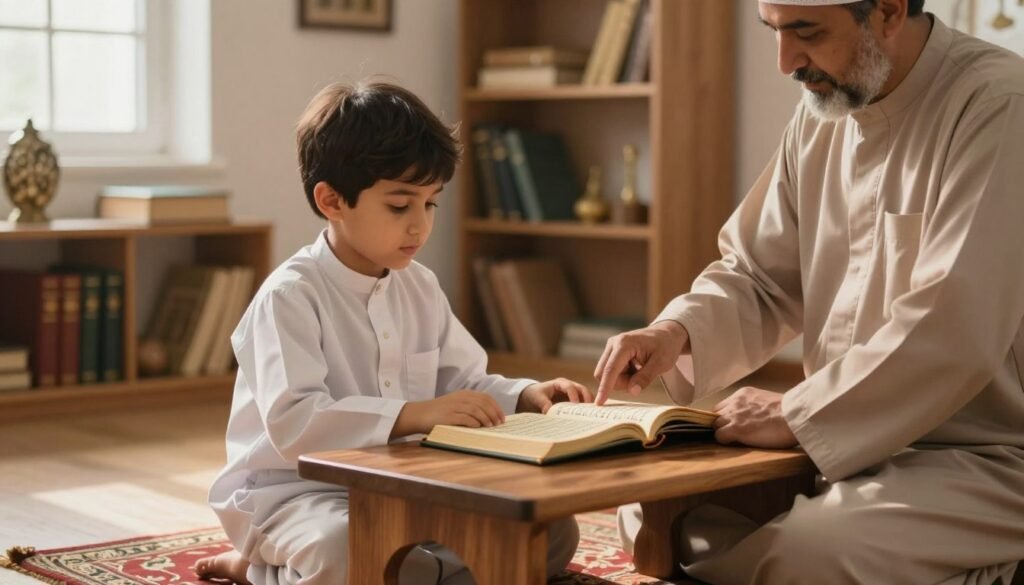
Mastering Tajweed transforms a child’s recitation from simply repeating words to delivering the divine message with clarity and beauty. For non-Arabic speaking parents, this can feel daunting, but it’s a vital part of the journey. Correct pronunciation ensures the meaning is preserved and the recitation is valid for prayer. More than that, it instills a deep love and respect for the Quran’s melodic rhythm.
The Importance of Proper Pronunciation from the Start
Starting with correct Tajweed is much easier than fixing mistakes later. When children learn the right way from the beginning, good habits become second nature. This builds their confidence immensely. A child who recites beautifully feels a stronger connection to the words and takes greater pride in their Quran recitation for kids.
Rushing through memorization without focusing on pronunciation can lead to errors that are hard to unlearn. Taking it slow and getting the sounds right is an investment in your child’s lifelong relationship with the Quran.
Simple Tajweed Rules Kids Can Learn Early
You don’t need to be an expert to introduce the basics. Begin with one or two observable rules that are easy to hear and practice. Two perfect starting points are Noon Saakin and Meem Saakin.
- Noon Saakin (نْ): This is when the letter Noon has a sukoon (a small circle meaning no vowel). Teach your child to pronounce it clearly from the nose—a light, humming sound. It should not be skipped or mumbled.
- Meem Saakin (مْ): Similarly, when Meem has a sukoon, the sound should come with closed lips, creating a gentle humming. It’s a distinct, rounded sound.
Practice these by finding examples in short surahs they know, like Al-Falaq or An-Nas. Make it a game of “spot the sound.”
Using Audio from Expert Qaris as the Gold Standard
The most practical tool for teaching correct Tajweed is already at your fingertips. Use recordings from renowned, precise reciters like Sheikh Al-Hussary or Sheikh Al-Minshawi as the auditory model. Their recitation is the gold standard for pronunciation and rhythm.
Here’s how to use them effectively. Have your child listen to a short verse repeatedly. Then, encourage them to imitate the exact sound they hear. This “listen-and-repeat” method is powerful for beautiful Quran recitation for kids. Create a daily habit of listening together, turning it into a calming and educational routine.
The Non-Negotiable Habit: Systematic Revision (Muraja’ah) to Lock It In
The secret to lifelong Quranic retention isn’t found in the initial memorization—it’s in the consistent, smart revision that follows. Think of revision as the glue that holds each precious verse in place. Without it, even the most diligently learned passages can slip away. As one expert simply puts it, “Revision Is Everything.”
How the Science of Memory Applies to Quran Memorization
Our brains are designed to forget information we don’t use. This isn’t a flaw in your child’s effort; it’s a feature of human biology. The “forgetting curve” shows how memories fade rapidly without review. The good news? Each time we actively recall information, that memory strengthens and lasts longer. This is the science behind spaced repetition, the most effective way to memorize Quran permanently. Forgetting an old verse isn’t failure—it’s just a signal that it’s time for a review.
Building a Smart, Spaced Repetition Schedule
A clear, manageable plan removes the guesswork. A powerful rule to follow is spending 70% of your session time reviewing old verses and only 30% learning new ones. This prioritizes protection of what’s already been gained. Here’s a practical weekly framework:
- Daily: Review yesterday’s new lesson.
- Weekly (e.g., Saturday): Review everything learned that week.
- Monthly: Do a full recap of the past month’s memorization.
This layered approach ensures verses are revisited just as the brain is about to forget them, locking them into long-term memory.
Turning Downtime into Revision Time
Revision doesn’t always need a formal session. Weave it seamlessly into your day. Use quiet moments for quick, positive recall.
Listen to a playback of last week’s surah during a car ride. Do a quick 5-minute review together before bedtime stories. Ask your child to recite their favorite verse while helping you set the table. These micro-sessions reinforce learning without pressure and show that the Quran is a living part of daily life. This habit is what truly transforms the effort to memorize Quran into a lasting treasure.
Harnessing Modern Tools: Apps and Online Resources for Quran Memorization for Kids
Technology can be a wonderful ally in making Quran memorization for kids more engaging and effective. The right digital resources complement your home efforts, offering structure, feedback, and fun.
Embrace these tools to support your child’s journey without replacing the essential human connection of learning.
Evaluating the Best Quran Memorization Apps for Kids
Not all apps are created equal. Look for features that directly support memorization and match your child’s learning style.
Top-rated options include:
- Tarteel AI: This app listens to your child recite and provides instant feedback on pronunciation. It’s like having a patient teacher available 24/7.
- Quran Companion: Excellent for older kids, it uses gamification. Users earn points for reviews and track progress visually, which builds motivation.
- Memize Quran for Kids: Designed for younger children, it focuses on short, repetitive audio lessons and colorful interfaces.
Follow this simple guide to choose:
- Test the free version first. Let your child try it for a week.
- Check for accurate Quranic text. Ensure the app uses an approved Mushaf.
- Prioritize engagement over flashy graphics. The goal is focused practice.
The Value of a Qualified Online Tutor for Structure and Feedback
While apps are great for practice, a human teacher provides irreplaceable guidance. Online quran memorization for children with a tutor adds accountability and personalized correction.
A good tutor does more than just listen. They build a structured plan, identify weak spots in memorization, and most importantly, correct Tajweed on the spot. This is crucial for building a strong foundation.
Platforms like Learn Quran Kids specialize in connecting families with certified teachers. When searching for quran memorization classes for kids, ask potential tutors about their methodology for teaching children and their revision system.
Step-by-step, here’s how to start:
- Schedule a trial lesson to see if the teacher’s style clicks with your child.
- Agree on clear goals and a weekly schedule.
- Ensure you, as a parent, receive regular progress updates.
Curating a Playlist of Favorite Reciters for Daily Listening
The sound of the Quran should be a familiar and comforting presence. Create a dedicated playlist of recitations from expert Qaris your child enjoys.
This strategy turns passive listening into a powerful memorization aid. Hearing verses repeated beautifully helps with pronunciation, rhythm, and retention.
Start with reciters known for clear, measured tempos, like Sheikh Mahmoud Khalil Al-Husary or Sheikh Abdul Basit Abdus Samad. Include the specific surahs your child is currently learning.
Play this playlist during car rides, quiet playtime, or before bed. This constant auditory exposure makes the verses stick and deepens their connection to the Quran’s melody.
Blending these modern tools—apps for independent practice, a tutor for expert guidance, and audio for immersion—creates a robust support system for your young Hafiz or Hafiza.
Sustaining the Flame: Keeping Your Child Motivated for the Long Haul

Long-term success in helping children memorize the Quran depends on maintaining their inner motivation through connection and celebration. The initial excitement can fade as the journey stretches on. Your role shifts from a teacher to a cheerleader and guide.
Your goal is to make Allah’s words a natural part of your child’s heartbeat. This requires intentional strategies that nurture a lasting love for the Quran.
Meaningful Praise and Celebrating Every Juz and Surah
Generic praise like “good job” loses its power. Instead, offer specific, sincere feedback. Point out their clear pronunciation or how well they remembered a tricky verse.
Celebrate every milestone, no matter how small. Completing a surah or a juz is a huge achievement. Mark these moments with a special family dinner, a certificate, or a small gift.
This positive reinforcement shows your child their effort is valued. It turns memorization into a series of victories they look forward to.
Linking Verses to Everyday Life and Islamic Stories
Help your child see the Quran as a living guide. When you hear the call to prayer, discuss Surah Al-Jumu’ah. On a sunny day, talk about Allah’s signs mentioned in Surah Ar-Rahman.
Connect verses to stories from the Seerah. Explain how the patience of Prophet Yusuf (AS) relates to verses about perseverance. This thematic linking makes memorization meaningful.
It transforms the words from Arabic text to lessons they can use. This deep connection is a powerful motivator to help children memorize Quran with understanding.
Strategies for Re-engaging a Child During a Slump
Every child hits a motivational wall. When this happens, compassion is key. First, take a short, guilt-free break. A few days off can renew energy.
Return to confidence by revisiting old, easy surahs they love to recite. This reminds them of their capability and joy.
Change the activity style completely. If drills feel stale, switch to an art project about a surah’s theme or a memory game. Sometimes, a new environment, like practicing in the park, can reset their focus.
Your steady support during these slumps teaches resilience. It shows them that continuing the journey, even slowly, is what truly matters.
Your Guide to a Meaningful Family Journey
Helping your child memorize the Quran at home is a beautiful journey. It builds a strong Islamic identity and brings your family closer to Allah. This path requires patience, consistency, and the right tools for success.
Remember the key steps. Create a peaceful space for learning. Build a solid daily routine that fits your child’s life. Use fun activities and smart memorization techniques to make the process engaging. Celebrate every small victory to keep motivation strong.
The benefits of Quran memorization for kids last a lifetime. It strengthens their memory and discipline. It is a source of eternal reward and great pride for your family. This journey is an investment in your child’s spiritual growth.
Trust in your effort and make sincere dua for your child’s success. Cherish the special bond that forms as you learn together. With love and steady steps, you can make this a rewarding experience for everyone.
Help Your Child Memorize the Quran