
Helping children memorize Quran at home can feel difficult when life is already full. Many Muslim parents want their children to stay connected to the Quran, but busy schedules, short attention spans, and inconsistent routines can make that goal feel harder than it should be.
That is why a clear and gentle method matters.
When a lesson is short, focused, and easy to repeat, children usually respond much better. They feel calmer, more confident, and more willing to come back the next day. Instead of making memorization feel heavy, we can turn it into a simple part of daily family life.
In this guide, we will look at a practical way to help your child memorize Surah An-Naba verses 30-33 step by step. The goal is not pressure. The goal is steady progress through listening, repetition, review, and encouragement.
Why This Lesson Works Well for Kids
Children usually do better when they are asked to memorize a small section at a time. A short lesson gives them a clear target. It also helps parents stay consistent without feeling that Quran time needs a perfect setup every day.
This is especially important for families living in the West. Parents are balancing school runs, work, meals, homework, and everything else that fills the day. A short memorization lesson is easier to repeat regularly, and regular practice matters more than long occasional sessions.
When children feel that the lesson is manageable, they are more likely to stay engaged. They begin to expect Quran time as part of the routine instead of seeing it as something stressful.
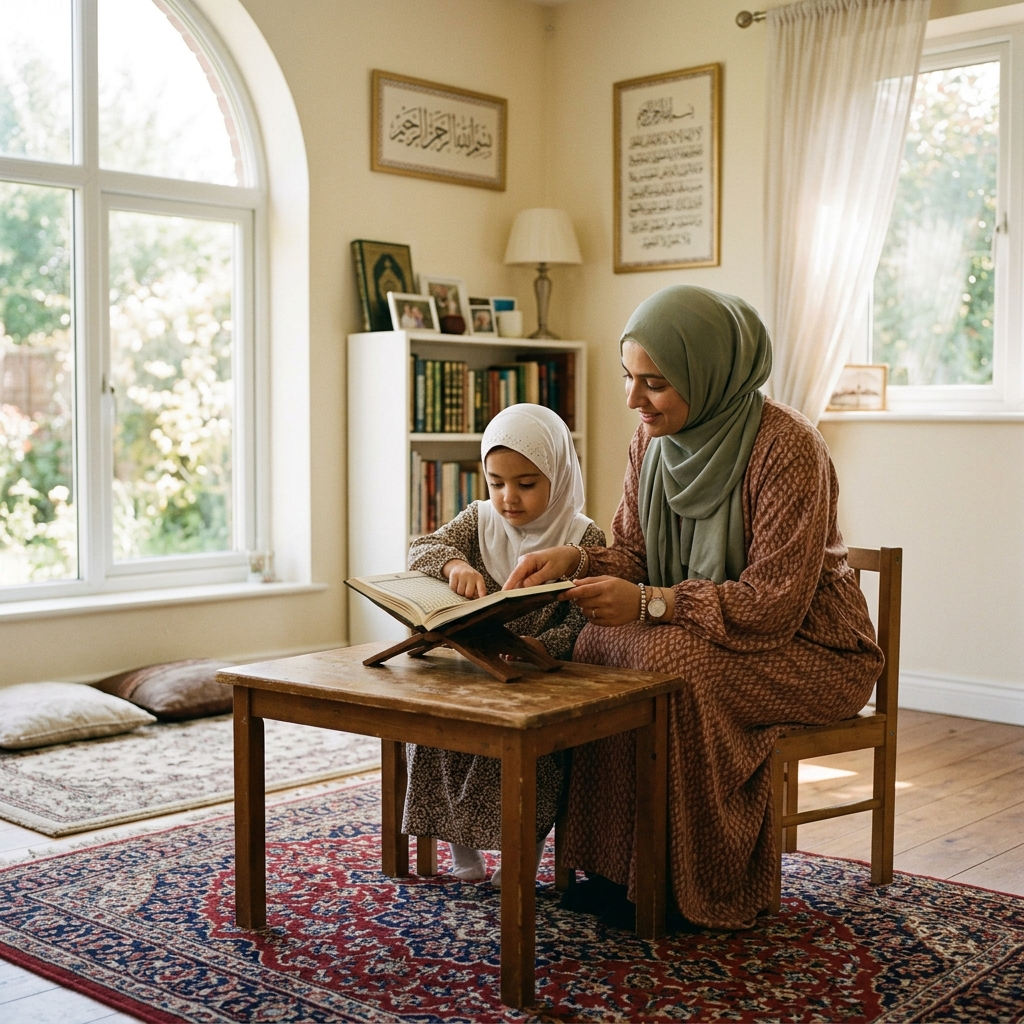
Start with Listening First
Before asking your child to repeat the verses, let them listen carefully to the recitation.
This first step is simple, but it helps a lot. Listening allows the child to become familiar with the sound and rhythm of the lesson before they try to say it themselves. For many children, this lowers hesitation and makes repetition feel easier.
You can play the lesson video during a quiet moment at home or as part of your daily Quran routine.
Lesson Video: [Insert Video URL Here]
Keep this first stage short. A few minutes of focused listening is enough. You do not need to force a long session. The point is to help the child feel comfortable with the recitation.
Break the Verses into Small Parts
One of the best ways to support memorization is to avoid teaching too much at once.
Instead of asking your child to repeat all the verses in one go, divide the lesson into smaller parts. Let them repeat one short line, then repeat it again, and then move to the next small section. After that, connect the two parts together.
This method makes the lesson feel easier. It also gives the child small wins during the session, and those small wins build confidence.
If your child forgets a line, do not rush forward. Stay with that same part and repeat it calmly. Strong memorization is built through steady repetition, not speed.
Use Short Daily Sessions
For many children, a short daily lesson works better than a long session once in a while.
Even five to ten focused minutes can be enough when done consistently. What matters most is building a rhythm that fits your family. Some parents prefer after Fajr. Others choose after school, before bed, or during a quiet evening moment.
There is no perfect schedule for every home. The best routine is the one you can repeat.
Try to keep the environment calm. Turn off background distractions, put phones aside, and give the child a peaceful few minutes of attention. A quiet and predictable setting can make memorization easier and more enjoyable.
Review Before Adding More
A simple review habit can make a big difference.
Before starting anything new, go back over what your child already learned. Let them repeat yesterday’s part first. This helps strengthen memory and keeps the lesson firm.
If the child can recite the section comfortably, you can move forward. If not, spend one more day reviewing. There is nothing wrong with that. In fact, it often leads to better long-term results.
Children do not need pressure to make progress. They need steady review, encouragement, and enough time to feel secure in what they are learning.
Make the Session Feel Positive
The emotional tone of the lesson matters as much as the memorization steps.
If Quran time feels tense or rushed, children may resist it. But when it feels calm and supportive, they are more likely to engage with confidence.
Use simple words of encouragement during the session:
- “That was a strong try.”
- “You remembered more today.”
- “Let’s repeat it together once more.”
- “You’re doing well—keep going.”
Praise effort, focus, and consistency. This helps children feel successful even when they are still improving.
A positive experience today makes it easier to return tomorrow.
3 Practical Tips for Parents
1. Stay with one short goal
Focus only on verses 30-33 for this lesson. Keeping the target small helps the child stay calm and motivated.
2. Repeat across several days
You do not need to finish everything quickly. Repeating the same lesson over a few days often leads to stronger memorization.
3. Use the video as part of the routine
A guided lesson makes the process easier for both parent and child. It helps you stay consistent and gives the child a clear pattern to follow.
If you want to support this lesson with a full page for the surah, use this space: Surah Page: Memorize Surah An-Naba for Kids (Complete Guide)
A Simple Way to Build Quran Habits at Home
One short lesson may seem small, but it can create real momentum.
When a child successfully memorizes one manageable section, they begin to feel that Quran learning is something they can do. That confidence matters. It helps the next lesson feel more familiar and less intimidating.
Over time, these small steps can become a strong home routine. Listening, repeating, reviewing, and encouraging—these simple actions can turn memorization into a sustainable family habit.
And when the process feels clear, parents feel less overwhelmed too.
Conclusion
Helping your child memorize Surah An-Naba verses 30-33 does not need to be complicated.
With a short lesson, patient repetition, and calm review, you can make memorization feel easier and more natural at home. What matters most is not speed. What matters is consistency, encouragement, and a routine your child can return to with confidence.
Start with the lesson video, move one small part at a time, and keep the experience gentle.
If your family benefits from this step-by-step method, you can continue with a more structured learning path here: Full Package: Get the bundle and start saving now
Store Visit the store here
Start small, stay consistent, and let your child grow in confidence one lesson at a time.
FAQ
How long should this lesson take each day?
For many children, 5 to 10 focused minutes is enough. Short sessions are often easier to repeat consistently.
What if my child forgets part of the lesson?
That is normal. Go back, repeat the same section calmly, and review again the next day before moving on.
Should I teach all four verses in one day?
Not necessarily. Some children do better when the lesson is spread over several days. Strong memorization is more important than quick memorization.
Can beginners use this method?
Yes. This approach is helpful for beginners because it breaks the lesson into small and manageable steps.
Use the lesson video to begin today, and if your child responds well to this step-by-step approach, continue with the full Ayah Tardeed learning method for a more structured Quran memorization journey.